

This feature is developed by ayaka-notes/ayakaleaf-pro. It is introduced from v6.4.0 and later.
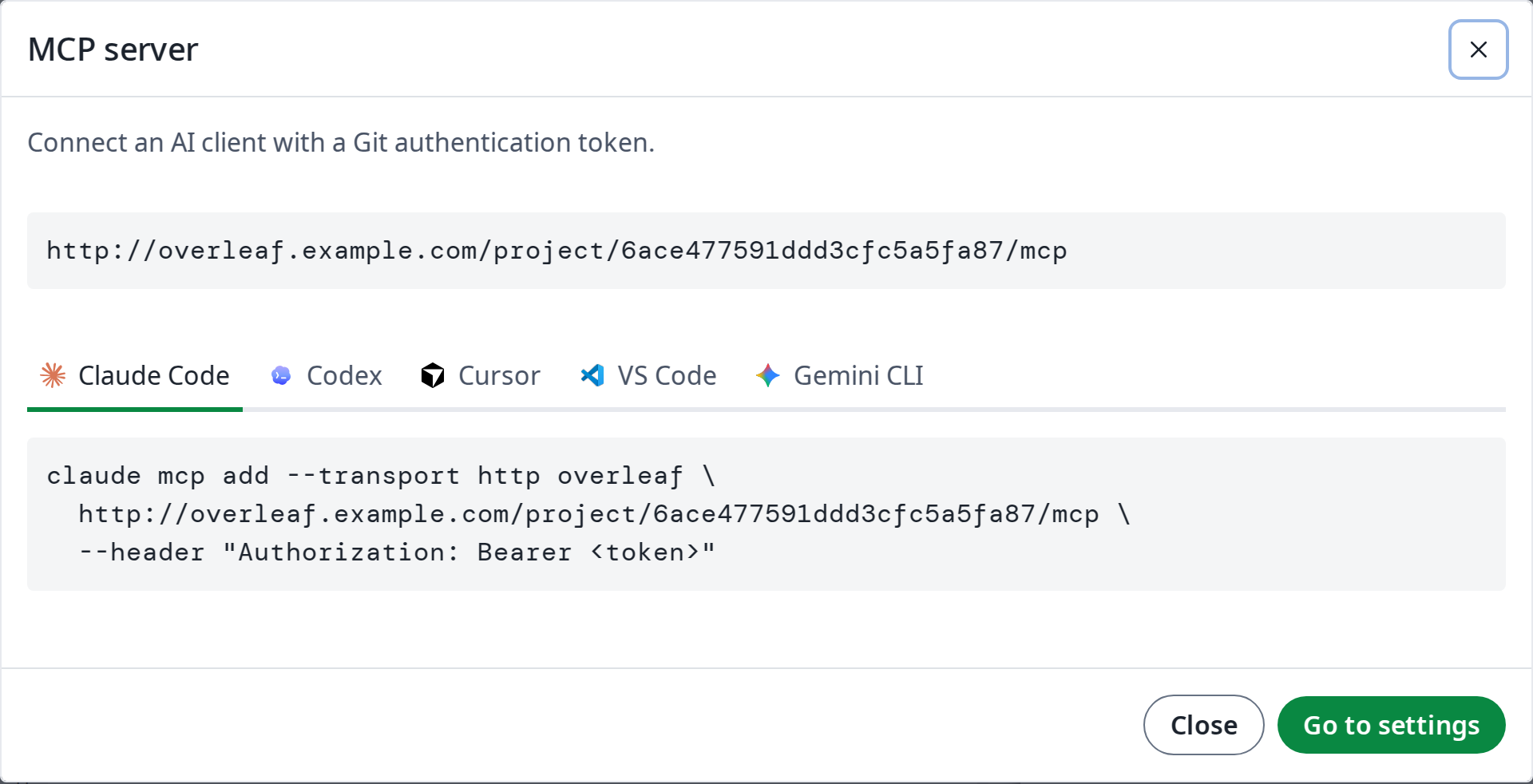
Integrations → MCP server
Setup
The MCP server comes with the Git integration: enable git-bridge, and the MCP server is available too. There is nothing else to configure.Connect an AI client
- In Account Settings, generate a Git authentication token. The same token is used for the MCP server and for Git.
- In the editor, open Integrations and click MCP server. It shows the address of the project’s MCP server,
https://<your-overleaf>/project/<project_id>/mcp, and how to add it to each AI client: copy the command, and replace<token>with your token.
Usage
Once connected, ask the AI client in plain words. For example:Tools
Edits made with
edit_file and write_file show live in the editor and merge with those of collaborators. For many files at once, binary files or renames, the AI client can also clone the project with Git and push.
Permissions
The MCP server follows the project’s sharing settings, like Git:- Everyone who can view the project can read it, compile it and download its output.
- Only the owner and editors can change its files and settings.
- Reviewers can also reply to comments, and resolve or reopen the comments they started.
- Viewers who joined with a link cannot see the comments, as in the editor.