

This feature is developed by ayaka-notes/ayakaleaf-pro. It is introduced from v6.4.0 and later. It’s still in beta status. We need your feedback if you have any problem.
Apps/<your Dropbox app>/, changes in Overleaf are sent to Dropbox, and changes made in Dropbox come back to Overleaf.
Setup Dropbox Synchronisation
Create an app in the Dropbox App Console, signed in with the Dropbox account that will own the app:- Click Create app, then fill in the page:
- 1. Choose an API: select Scoped access.
- 2. Choose the type of access you need: select App folder, not Full Dropbox. Overleaf only syncs inside the folder of the app.
- 3. Name your app: enter a name, e.g.
Overleaf. It must be unique on Dropbox. Each user’s projects appear inApps/<name of your app>/in their Dropbox, and this name isDROPBOX_APP_NAMEbelow. - Click Create app. The app opens on its Settings tab.
- On the Permissions tab, under Files and folders, check
files.metadata.write,files.content.writeandfiles.content.read.account_info.readandfiles.metadata.readare checked with them and cannot be unchecked. Do not check other permissions. - Click Submit in the bar at the bottom of the Permissions tab. Without Submit the permissions are not saved, and Dropbox refuses to sync files for the users who link their account.
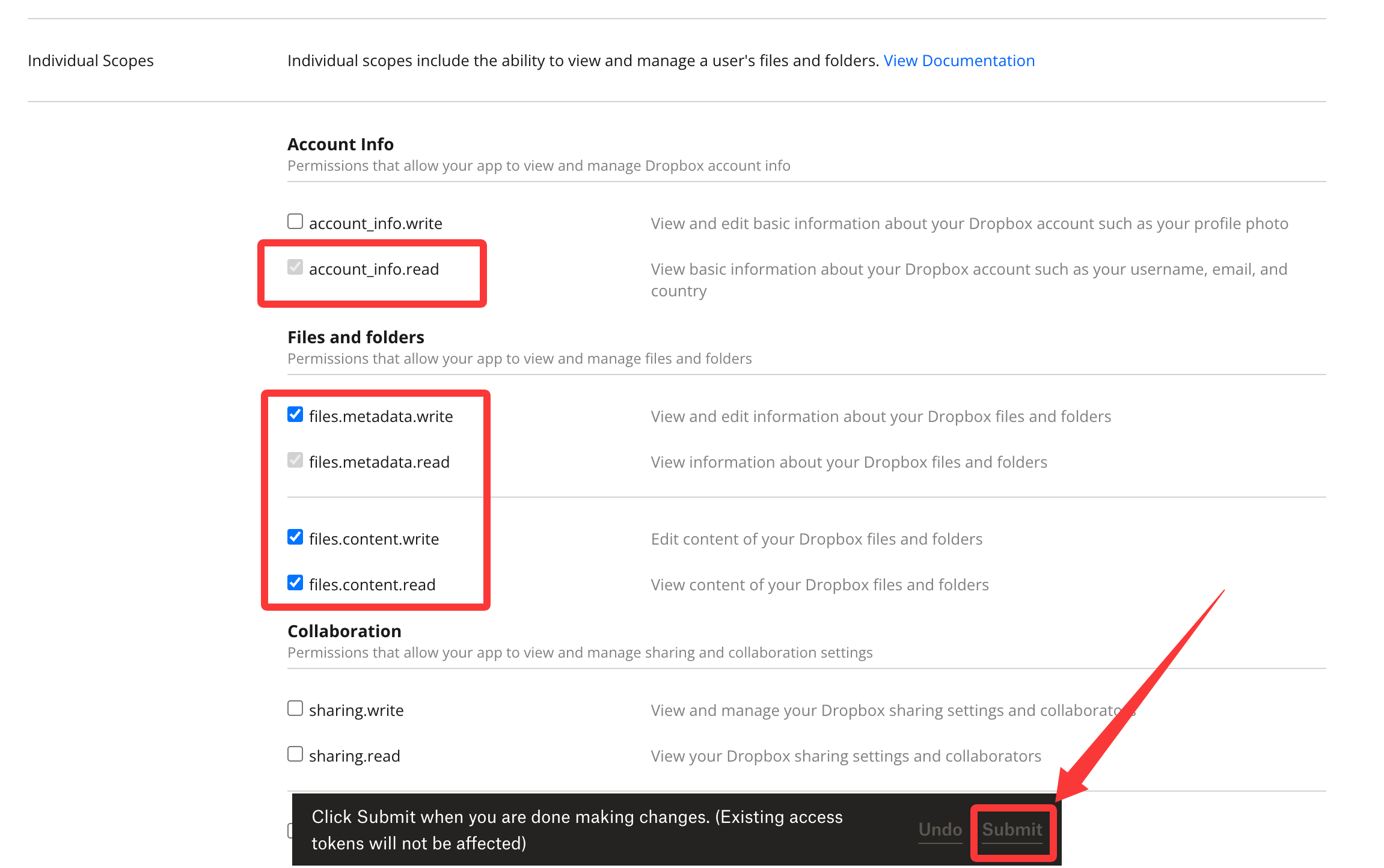
Dropbox App Console: the permissions to check, saved with Submit
- On the Settings tab, under OAuth 2, enter
${OVERLEAF_SITE_URL}/user/dropbox/oauth/callbackin Redirect URIs, then click Add. Typing the URI is not enough: it is only saved once it shows in the list above the field.
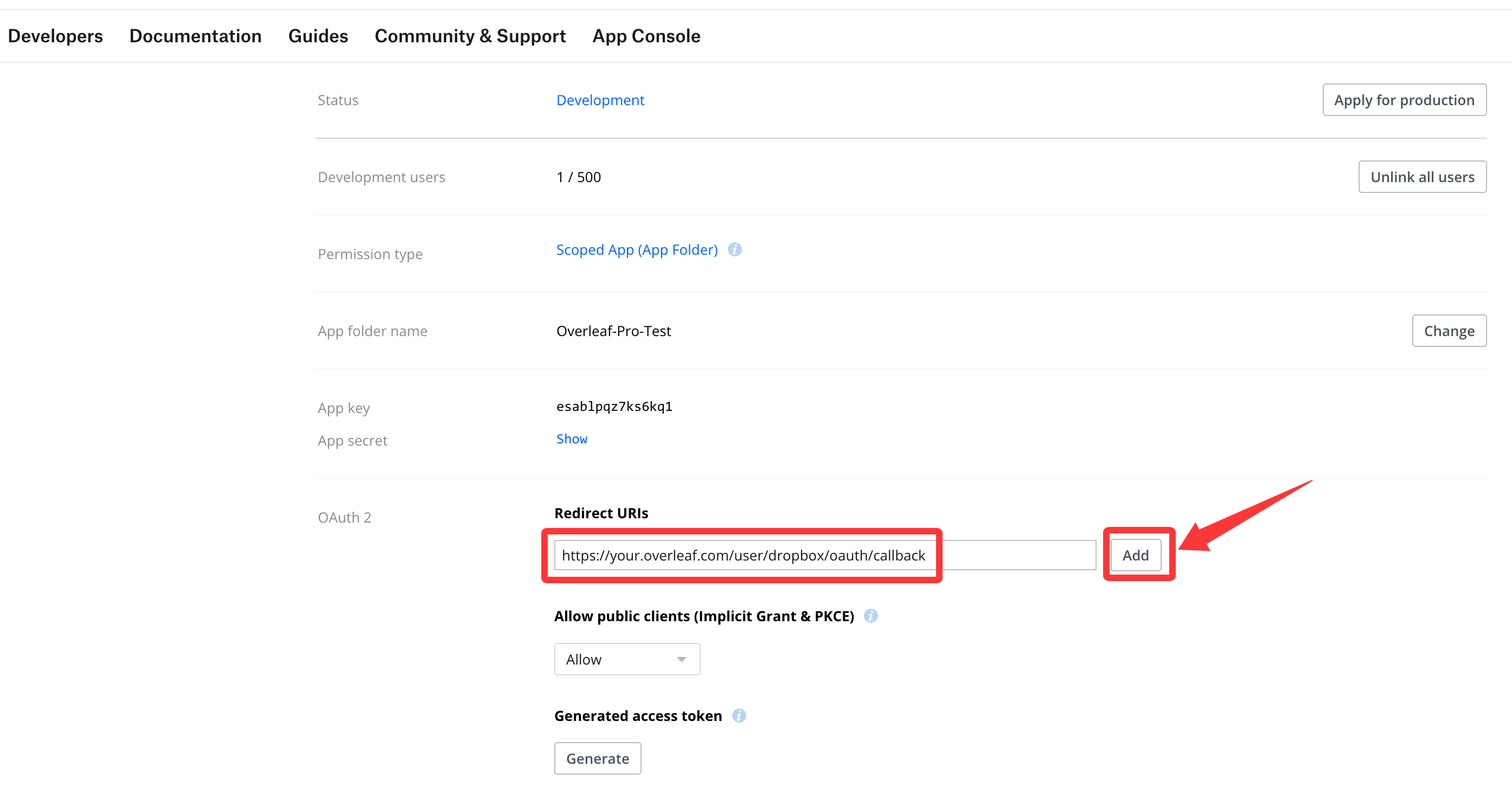
Dropbox App Console: enter the redirect URI, then click Add
- On the Settings tab, under Webhooks, enter
${OVERLEAF_SITE_URL}/dropbox/webhookin Webhook URIs, then click Add as well. Dropbox calls it right away to check it, so Overleaf must already be running with the settings below and be reachable from the internet (see Webhook). Its status shows Enabled once the check passes.
config/variables.env
DROPBOX_SYNC_PROXY_URL=http://10.0.0.1:10808. It must be a standard HTTP/HTTPS forward proxy, and must not use 127.0.0.1.
Webhook
Dropbox tells Overleaf about changes in Dropbox with a webhook, so they show up in Overleaf within seconds. The webhook goes to your site’s address,${OVERLEAF_SITE_URL}/dropbox/webhook, no extra port is needed, but Dropbox must be able to reach it from the internet. When you add it in the App Console, Dropbox checks it right away.
Without a webhook, for example on a server that Dropbox cannot reach, changes in Overleaf are still sent to Dropbox, but changes in Dropbox only come back when a user clicks sync this project now in the Dropbox dialog of the editor.
How syncing works
- Linking: when a user links their Dropbox account, the projects they own are sent to Dropbox. Projects shared with them appear in Dropbox with their next change.
- Overleaf to Dropbox: new files, renames, moves, deletions and project renames are sent right away. Edits in the editor are sent once Overleaf saves them to its storage, a few minutes after everyone has left the project. To send them earlier, click sync this project now in the Dropbox dialog of the editor (once per minute).
- Dropbox to Overleaf: new and changed files, new folders and deletions in a project folder are applied to the project. A new folder at the top of the app folder becomes a new project. Deleting a project folder in Dropbox marks the project as deleted in Overleaf.
- Conflicts: when a file changes in both places at the same time, the last change wins. Dropbox may keep the other version as a conflicted copy.
- Collaborators: collaborators who link their Dropbox get the projects shared with them. Read-only viewers and reviewers get the project, but their changes in Dropbox do not sync back to Overleaf.
- Ignored files: files Overleaf does not sync, like build output (
.aux,.log, …),.DS_Storeor Python virtual environments, stay in Dropbox only.
Q&A
Why can a user not link their Dropbox account?
Why can a user not link their Dropbox account?
- Projects are matched to Dropbox folders by name, so a user who has two projects with the same name is asked to rename one of them first.
- A Dropbox account can only be linked to one Overleaf account.
Why was a Dropbox account unlinked?
Why was a Dropbox account unlinked?
Answer: Overleaf unlinks a Dropbox account when Dropbox refuses its token (for example after the user removed the app in Dropbox), when the Dropbox is full, or when Dropbox suspended the account. The user can link it again once the problem is solved.
Can I rename a project folder in Dropbox?
Can I rename a project folder in Dropbox?
Answer: Please rename the project in Overleaf instead. For Overleaf, renaming the folder in Dropbox deletes the project folder and creates a new one, so the old project is marked as deleted and a new project is created from the files.